
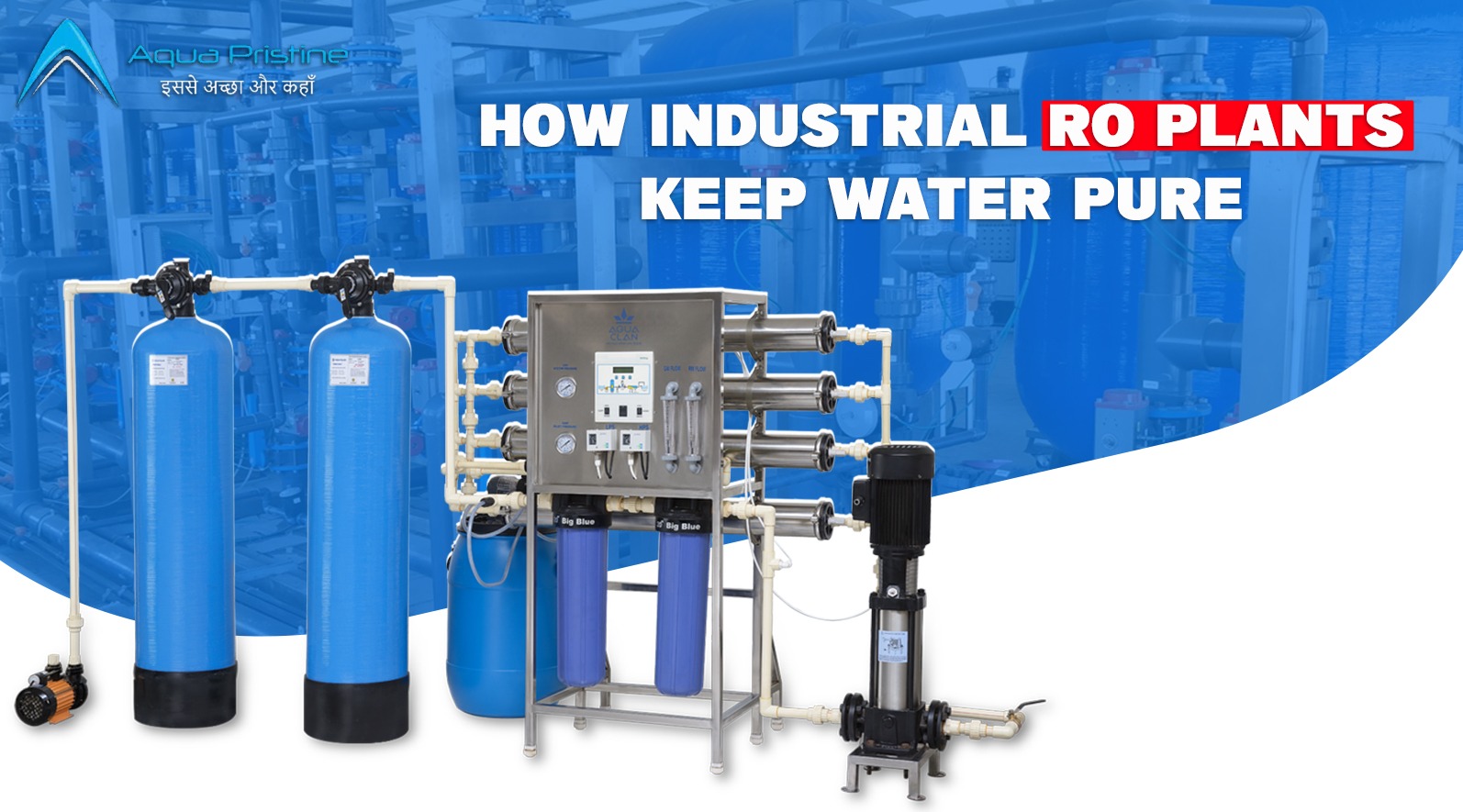
Clean water is essential for every industry, whether it needs it for production, keeping things cold, or cleaning. Normal water filters are not always effective for large-scale purification. That is why Industrial RO (Reverse Osmosis) Plants make a difference. They are built to manage a lot of water and still maintain high levels of quality. In this blog, we aim to explain what an industrial RO plant is, how it works, and the reason it is vital to industrial infrastructure nowadays.
What Is an Industrial RO Plant?
Industrial RO system is a water purifying system that uses the principle of reverse osmosis to remove dissolved salts and impurities like minerals and metals from water. It is suited for flows of large volumes of water, and is commonly employed in pharmaceuticals, textiles, food processing, power generation and a range of other industries. By applying pressure, it pushes water through semi-permeable membranes to remove water from chemicals or other solutions to produce pure water (permeate) and reject water (brine).
Key Components of an Industrial RO Plant
If you wish to understand a small or large RO plant, you should learn about its main components.
Pretreatment System
There are several pretreatment processes before water is sent to the RO membranes to remove different impurities. These typically include:
- Sand filters to eliminate suspended solids
- Activated carbon filters to remove chlorine and organic compounds
- Dosing systems for adding antiscalants and pH adjusters
High-Pressure Pump
This piece takes care of exerting the needed pressure for pretreated water to pass through the RO membranes. Depending on the source of the water and its dissolved solids, the pressure in a home is usually found between 10 and 30 bars.
RO Membranes
They are the vital components of the plant. Semi-permeable membranes allow fresh water to flow through but refuse salts, bacteria, and impurities.
Post-Treatment System
In many cases, treated water may require additional conditioning such as:
- pH correction
- Mineral addition (for taste or usability)
- UV sterilization or ozone treatment for microbial safety
Control Panel & Monitoring Systems
RO plants today are fitted with control panels, sensors, and meters that facilitate the observation of important operating conditions, ensuring everything operates without issues.
How Does an Industrial RO Plant Work?
Let’s break down the entire process step-by-step:
Step 1: Raw Water Intake
Water is drawn from sources like borewells, rivers, or municipal supply.
Step 2: Pretreatment
Sand filters, carbon filters, and adding chemicals are used to remove any sand or harmful things that might affect the RO membranes.
Step 3: High-Pressure Pumping
A pump applies high pressure to the pretreated water to drive it through the RO membranes.
Step 4: Reverse Osmosis
Under pressure, water passes through the semi-permeable membranes. Contaminants are left behind and flushed out as reject water, while purified water moves forward.
Step 5: Permeate Collection
The clean water (permeate) is collected in a storage tank for further use.
Step 6: Reject Water Disposal
The rejected water is either treated further or safely disposed of, depending on environmental regulations.
Step 7: Post-Treatment
The purified water goes through a final adjustment according to the industry’s needs.
Pro Tip: A good RO membrane can remove over 99% of the salt and contaminants, providing ultra-clean water for industrial needs.
Advantages of Using Industrial RO Plants
- Delivers consistent, high-quality water
- Reduces dependency on chemical-based purification
- Minimizes operational downtime due to water-related equipment failure
- Energy-efficient models reduce power consumption
- Scalable designs to match small or large industrial needs
Read Also:- Top 10 Sewage and Effluent Treatment Plant Manufacturers
Common Applications of Industrial RO Systems
Industrial RO plants are incredibly versatile and used in a wide range of applications, including:
- Boiler feedwater treatment in power plants
- Cooling tower make-up water
- Purified water for food and beverage manufacturing
- Water for pharmaceuticals and cosmetics production
- Semiconductor and electronics manufacturing
Challenges and Maintenance Tips
Despite their efficiency, industrial RO systems can face some operational challenges:
Common Issues:
- Membrane fouling due to poor pretreatment
- Scaling from high mineral content
- Pressure drops from clogged filters
Maintenance Tips:
- Regularly backwash filters and clean membranes
- Monitor water quality indicators daily
- Replace consumables like cartridges and membranes as recommended
- Ensure timely servicing of pumps and dosing systems
Conclusion
At Aqua Pristine, we feel that it is your responsibility to choose a true water purification system for your home. Being an industrial RO plant manufacturer in Gurgaon, we take great satisfaction in providing customised and reliable RO solutions to businesses. All systems are created to high standards and are maintained by qualified professionals. If you aim to boost your facility’s water treatment, feel free to call us today.